Applications
Real-world examples
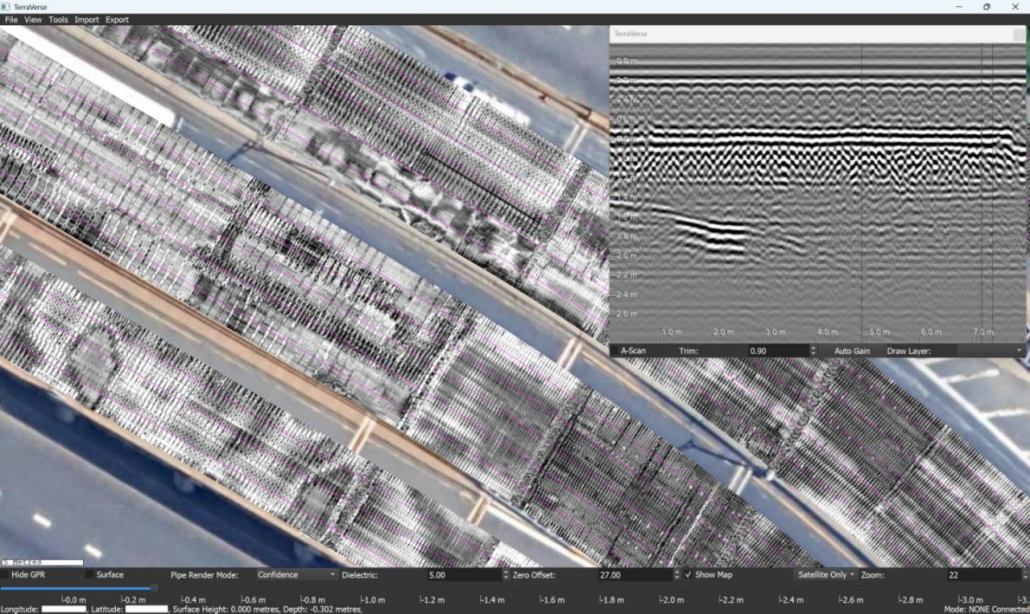
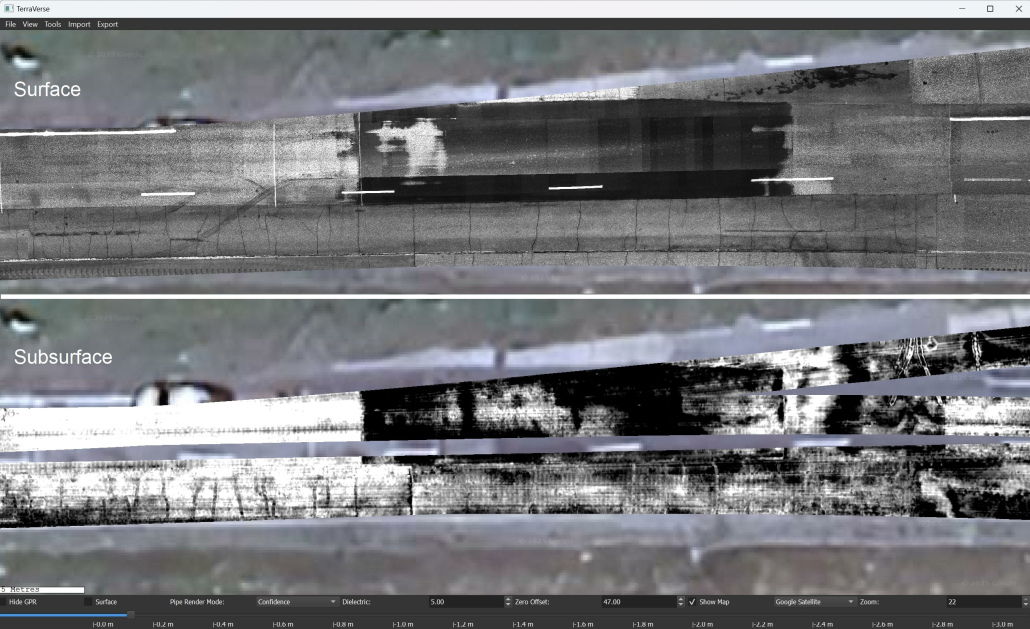
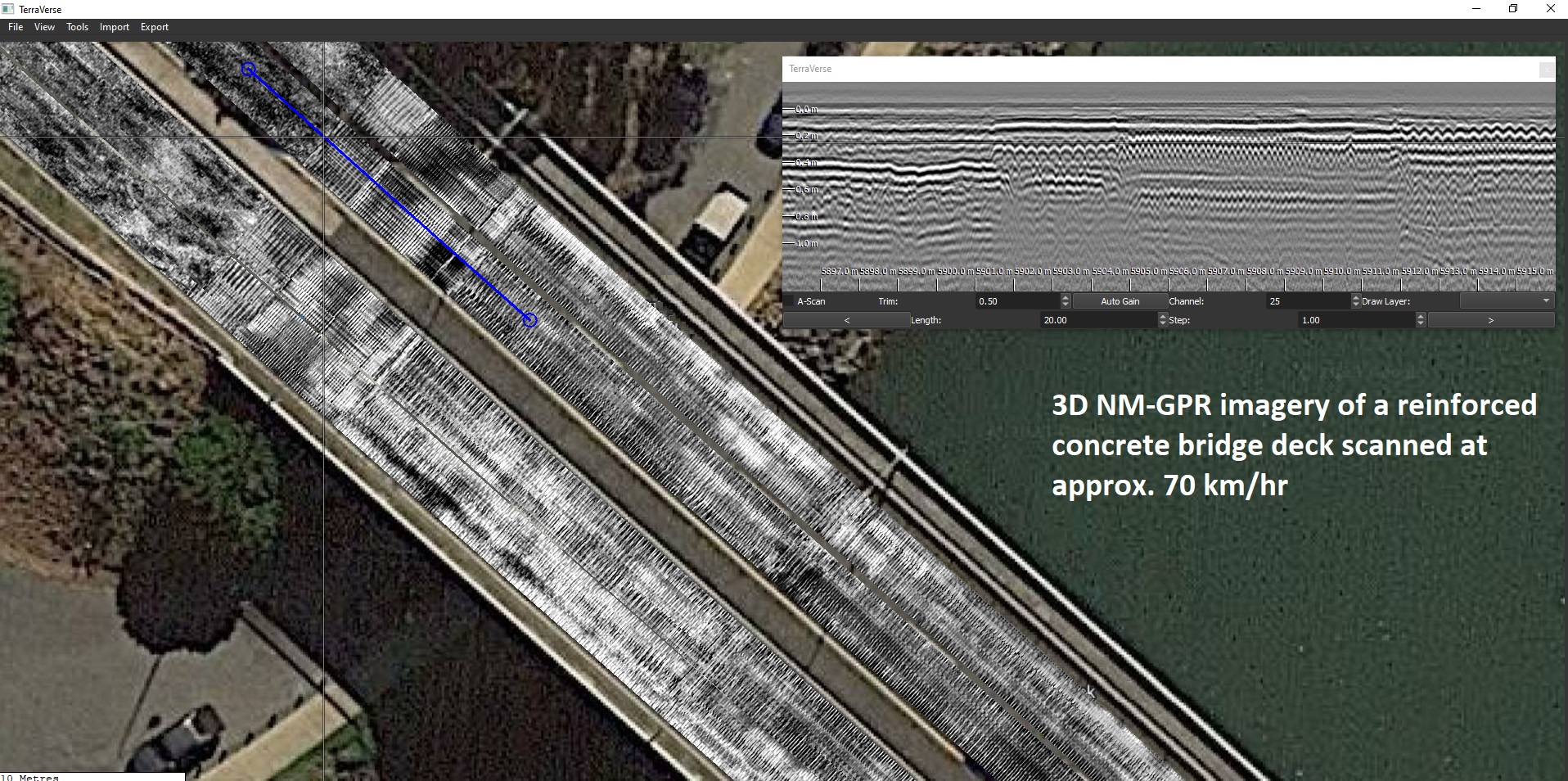
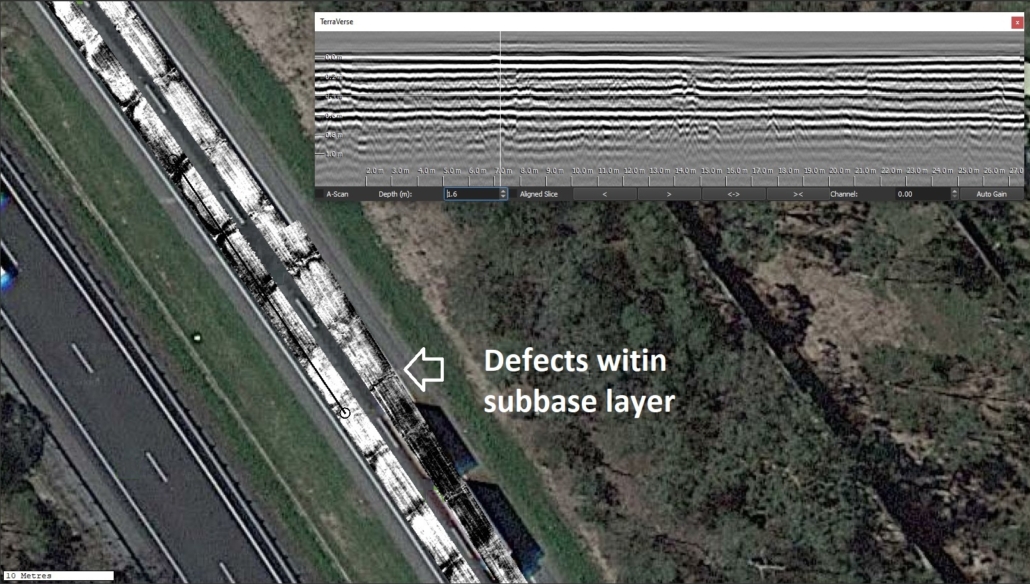
The following real-world applications of the Kerberos™ platform illustrate the types of subsurface details, defects and features of interest that can be imaged at traffic speeds without causing public disruption.
Airport pavement investigation
Investigating a multi-lane highway
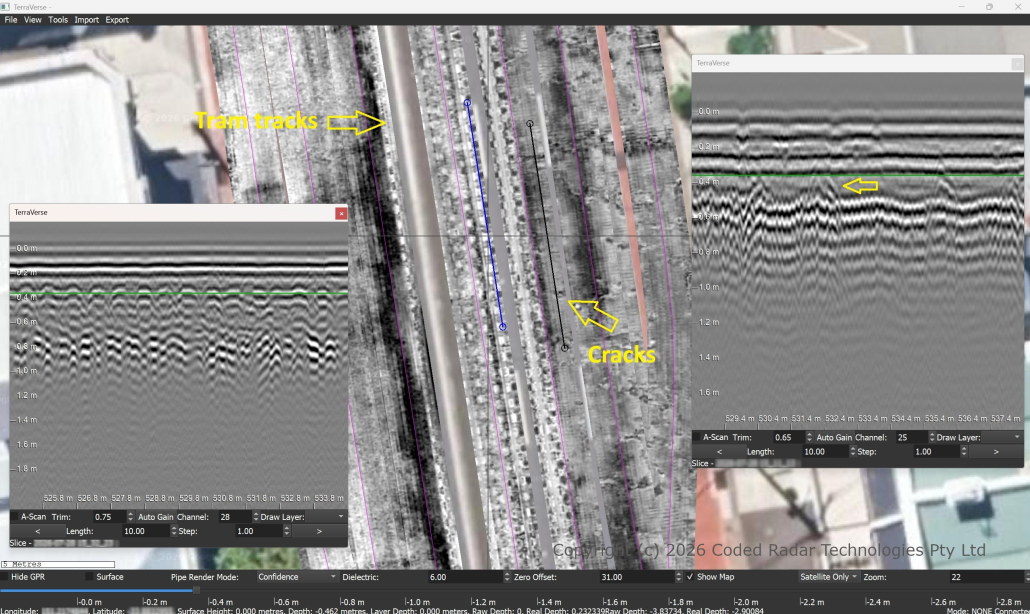
Cracking within pavement layers
Subsurface Utility Mapping
Large-scale pavement investigation
Detecting subgrade cracks
Application Areas
The 3D subsurface and surface-imaging capabilities of Kerberos™ and Lynx support a wide range of applications, including:
Pavements
- As constructed information:
- Scan roads, airport pavements and bridge approaches to determine as-constructed details of pavements along the road, or cross-sectional views across multiple lanes.
- Locate changes in pavement construction, even across large and complex multi-lane roads, using elevation, cross-sectional and plan views.
- Detect, locate and characterise previous pavement repairs—for example, by distinguishing steel-fibre concrete repairs from reinforced concrete repairs—and identify working platforms within the subgrade.
- Capture a snapshot of current surface and subsurface conditions for planning, monitoring or evidentiary purposes—for example, to document conditions before major infrastructure projects or monitor the performance of completed works.
- Defects and obstructions:
- Detect cracks within or below pavement layers.
- Detect and map developing voids and sinkholes.
- Detect shoving defects within failing asphalt layers.
- Investigate underlying causes and subsurface extent of defects visible at the road surface.
- Detect and map disused subsurface infrastructure, such as tram tracks, utilities and pits, as well as other potential obstructions to remedial works, such as boulders and rock.
- Detect areas of increased moisture.
- Optimising conventional investigations:
- Scan large sites quickly and efficiently to distinguish between homogeneous and anomalous areas.
- Optimise the number and value of cores and trenches by targeting representative locations and areas of particular interest determined from the 3D NM-GPR data.
Subsurface Utilities / Public Utility Plant (PUP)
- Locate and map subsurface utilities and estimate their depths.
- Detect and map buried pits, valves and protection slabs.
- Use visible surface features, such as inlets, manholes and valves, as clues to guide GPR interpretation.
Bridges
- Determine the layout, spacing and depth of existing reinforcement relative to the deck surface.
- Map the thickness of asphalt deck wearing surface (DWS) materials to support remedial-work planning.
- Investigate the underlying causes of bridge-approach subsidence and other surface defects.
- Capture surface imagery of the deck for condition-monitoring purposes.
Law enforcement
- Identify the presence and precise location of buried objects and areas of disturbed ground.
Environmental
- Map tree-root patterns, investigate near-surface geology and measure the depth of capping layers.
Archeology
- Locate and map buried structures and grave plots.